Leave a Message

Thank you for your message. We will be in touch with you shortly.

How CTA Access Impacts Rent In The Loop

December 18, 2025

If you work in the Loop, shaving even five minutes off your door-to-door commute can feel like a raise. At the same time, living next to the “L” can mean higher rents and more noise than you expect. You want the convenience without overpaying for it. In this guide, you’ll learn how CTA access influences rent in the Loop, the real tradeoffs near tracks and bus corridors, and how to tour like a pro at rush hour to see what your commute really feels like. Let’s dive in.

What CTA access means in the Loop

Lines that matter to downtown renters

The Loop is surrounded by elevated “L” lines that make short, frequent trips easy, and it is also served by the Red and Blue subway lines for fast, cross-city travel. The Red Line operates around the clock, and both Red and Blue tend to run long service spans with high frequency that is less affected by street traffic. Elevated lines that circle and cut through the Loop connect to neighborhoods in every direction, which creates valuable transfer options for multi-leg commutes. High-frequency bus corridors add surface options for short hops when rail is crowded or delayed, and Metra’s regional rail terminals sit at the Loop’s edges for longer regional trips.

If you are new to Chicago or want a refresher on how lines connect downtown, review the official CTA system map before you tour.

Proximity benchmarks you can trust

In transit planning, a 1/4-mile walk is a common benchmark for being “near” a station. That is about 5 to 7 minutes on foot. Up to a 1/2-mile walk, or roughly 10 to 12 minutes, is still considered reasonable for many commuters. Immediate adjacency, like sharing a block with an entrance or being within a couple hundred meters, feels very different in daily life than a 6 to 10 block walk. Those small differences show up in both your budget and your morning routine.

Why the Loop behaves differently

Because the Loop packs a high concentration of jobs into a small area, the value of quick, frequent hops is higher than in many neighborhoods. Even one extra transfer or slow crosswalk can offset a short as-the-crow-flies distance. Elevators, escalators, and turnstiles can create bottlenecks at peak times, so two buildings the same distance from a station may offer very different door-to-door times. The takeaway: in the Loop, convenience is not just about distance. It is about friction.

How access affects rent bands

What pushes rents up near stations

You pay a premium near stations for reasons that go beyond map distance:

  • Time savings and reliability that reduce total travel time and transfers.
  • The ability to skip car ownership or paid parking, which is a major cost in the Loop.
  • Redundant options, like access to multiple lines and bus routes for evenings and weekends.
  • Buildings that pair modern amenities with transit messaging, which can amplify the premium.

Rent bands by distance

While every building and unit is different, a few patterns show up consistently:

  • Immediate adjacency: Buildings directly next to a major station or entrance tend to command the highest premium.
  • Within 1/4 mile: You still see a noticeable premium, but usually less than doorstep adjacency.
  • 1/4 to 1/2 mile: Many renters accept a slightly longer walk to capture some savings.
  • Beyond 1/2 mile: Rents are often materially lower, although transfer pain and total commute time typically rise.

Important modifiers matter too. Subway stations that serve the Red and Blue lines often justify higher premiums for jobs that require reliable cross-city access. Lines with 10 minutes or better frequency carry more value than infrequent routes. Strong bus corridors can create premiums as well, though those are usually smaller and more variable than rail-driven premiums.

Market dynamics to keep in mind

Demand in the Loop has been influenced by changing return-to-office and hybrid work policies. When more employers bring people back, buildings closest to the office core often regain pricing power faster. New high-amenity developments can lift baseline rents across the area, which means transit adjacency stacks on top of other features. Landlords and developers also price in a “convenience premium,” so compare list rent with your total cost of living, including parking, rideshares, and your time.

Noise, vibration, and comfort tradeoffs

What to expect near CTA infrastructure

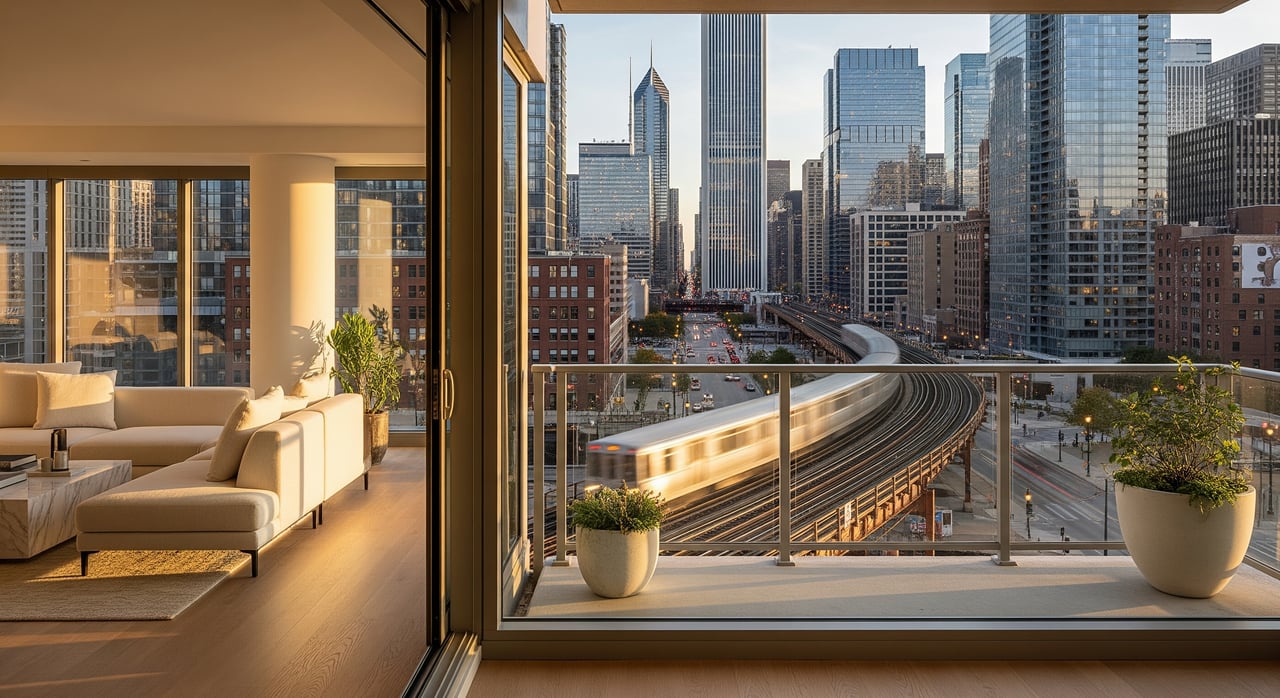
Living by elevated tracks usually means intermittent peaks: wheel squeal on curves, braking, and announcements. Subway noise tends to be less of a factor for street-level units, but ventilation shafts and station entrances can create localized noise and drafts right by the entrances. Along bus corridors, engine idling and acceleration are the main sources. Peak events, not just average noise, are what wake you up at night.

For health context, the World Health Organization’s Environmental Noise Guidelines note that exceeding recommended nighttime levels is linked to annoyance and sleep disturbance. Your tolerance and your building’s design play a big role in how this feels day to day.

How buildings reduce interior impact

Several factors can make a meaningful difference in your unit:

  • Floor level: Higher floors are generally quieter relative to street and elevated track noise.
  • Orientation: Units facing courtyards or away from tracks and busy streets are often calmer.
  • Building design: Setbacks, massing, and sound-rated windows, like double or triple glazing and laminated panes, help reduce both noise and vibration.
  • Internal systems: Elevator machinery or mechanical rooms can be as disruptive as outside noise if they are near bedrooms.

Vibration basics

Most modern track systems and well-isolated buildings keep vibration to a minimum, but older elevated structures can transmit a subtle rumble. The building’s structural connections and any dampening measures influence how much you feel it inside your unit. Always test it yourself during a train pass.

Commute reality in rush hour

Frequency and reliability beat theoretical time

Published travel times do not include the friction that defines a Loop commute. Crowded platforms, escalator queues, and multiple signalized crosswalks all add minutes. A building with two stations and several bus options nearby can be more resilient than a building closer to one entrance, because you have alternatives when one line delays.

Peak patterns you will feel

In the morning, crowds funnel into core stations, which slows boarding and escalators. In the evening, outbound flows can turn certain platforms into chokepoints. Some stations are busier where multiple lines converge, and queuing can add 5 to 10 minutes before you even reach the platform. Off-peak periods feel faster to board, though some direct routes run less frequently.

Bus corridor realities

Buses are a strong backup for short trips, but congestion can impact reliability unless there are dedicated lanes or signal priority. Limited-stop or express routes often compete well with local service for door-to-door time. Watch for bunching or extended gaps when you tour.

Priorities for transit-dependent renters

If you rely on transit every day, aim to minimize transfers, pick lines and routes that run at least every 10 minutes at peak, and prioritize station entrances with elevators. Those details add up, especially if you carry a bag or bike.

Rush-hour touring checklist

Before the visit

  • Map the exact walking routes from the building to the nearest station entrances and to your workplace.
  • Note which lines those stations serve and whether they are subway or elevated.
  • Check real-time conditions and planned changes using CTA service advisories before you go.

On the tour: time the real commute

  • Visit during typical rush windows: 7:30 to 9:00 AM and 4:30 to 6:30 PM on a weekday.
  • Time door-to-door from the unit: walk to the entrance, count crosswalks, stairs, or elevator rides.
  • Track queuing inside the station: fare payment, escalator or elevator waits.
  • Note platform wait, crowding, and whether you can sit or you are standing.
  • Time any transfers, including up-and-down movements between lines.
  • Back at the building, ride the elevators during peak to see if waits add 5 to 10 minutes to your exit.

What to listen and look for inside the unit

  • Stand in bedrooms and living areas during a train pass and with windows closed to gauge peak noise.
  • Ask to tour a unit that faces both the tracks and the quiet side, if available, to compare.
  • Note any double or triple glazing and ask about recent façade or window upgrades.

Questions to ask management

  • Exact walking time to the nearest station entrances and which lines they serve.
  • Window and façade specs for noise mitigation, plus any recent retrofits.
  • Elevator capacity and typical waits during morning and evening peak.
  • Whether the unit faces tracks or a busy corridor and any policies around noise complaints.
  • Parking availability and cost if you are considering keeping a car as backup.

Red flags to catch early

  • Units directly over or next to station entrances or ventilation shafts that stay noisy late and early.
  • Persistent elevator queues that add 5 to 10 minutes at peak.
  • Stations without accessible entrances when you need elevator access.
  • Units with single-pane windows or no sound-rated upgrades facing tracks or major bus corridors.

Weighing rent premium vs convenience

A simple framework can keep you honest:

  • Add up the rent difference between close-in and farther-out options.
  • Subtract what you expect to save on parking and car costs if transit makes going car-free realistic.
  • Put a value on time saved each day. Even 10 minutes each way is more than 80 hours a year.
  • Weigh non-monetary benefits like flexibility, bad-weather resilience, and fewer parking headaches.
  • Stress-test resilience. Two or more viable lines or bus routes nearby reduce the risk that a single disruption derails your day.

Where we come in

You do not need to solve this alone. Our team helps transit-focused renters stack the right tradeoffs for their budget and commute. We build tailored lists that prioritize the lines and station entrances you actually use, schedule escorted, rush-hour tours to time the real commute, and surface current move-in incentives so you see total cost, not just list rent. Our service is no-fee to you, fast, and transparent.

If you are ready to find the sweet spot between price, convenience, and comfort in the Loop, connect with The Michael Scavo Group and we will get your tours on the calendar.

FAQs

How does being next to a CTA station affect rent in the Chicago Loop?

  • Buildings immediately adjacent to major stations often command the highest premiums because they save time and offer more reliable, flexible commutes, while options a short walk away typically trade a lower price for a few extra minutes each day.

Are Red or Blue Line stations more valuable for Loop renters than other lines?

  • For many cross-city commutes, proximity to the Red or Blue subway lines can carry a higher premium because they run long spans at high frequency and are less affected by surface traffic, though value always depends on your specific route.

How noisy is it to live near the elevated tracks in the Loop?

  • Elevated track noise tends to arrive in peaks during train passbys, which can disrupt sleep if a unit faces the tracks, so look for higher floors, courtyard-facing layouts, and sound-rated windows, and test the unit during a passing train.

What should I time when I test a commute from a Loop apartment?

  • Time the full door-to-door journey: walking to the entrance, station queues for fares and escalators, platform waits, in-vehicle time, and any transfers, then repeat the process in the evening to see outbound crowding.

Do high-frequency bus corridors impact rent near the Loop?

  • Yes, strong bus corridors can add value by improving short trips and backup options, but the rent effect is usually smaller and more variable than what you see with rail adjacency.

Is paying a premium to avoid owning a car in the Loop worth it?

  • Often it is, since skipping parking and car costs can offset part of the rent premium while giving you flexibility and fewer headaches, especially if you are near multiple lines or strong bus service.

How can The Michael Scavo Group help a transit-dependent renter in the Loop?

  • We curate buildings by transit access, arrange rush-hour showings to test real commutes, highlight noise and elevator factors to watch, and help you compare total cost so you can pick the best fit quickly and with confidence.

Work With Us