Small Apartment, Big Life: Micro‑Living In The Loop
May 14, 2026
May 14, 2026
Ever feel like you need to choose between living in the middle of everything and having enough space to actually enjoy being home? In the Loop, that tradeoff is real, but it is not as simple as “tiny apartment, hard life.” If you are considering micro-living in downtown Chicago, the key is understanding how Loop apartments are designed, how the neighborhood works, and which layout fits your routine. Let’s dive in.
The Loop is built for access. Chicago Loop Alliance reports that the district covers about 1.1 square miles and includes 14 L stations, which accounted for 21% of all L station entries in 2024. It also noted that 90% of Metra rides in January and February 2025 either began or ended downtown.
That kind of transit density changes the way you live day to day. When your commute, dining, errands, and entertainment are close by, you often need less private square footage to make city life feel convenient. In the Loop, the neighborhood itself becomes part of your living space.
The residential base is also growing. Chicago Loop Alliance estimated the Loop population at 46,400 in 2022, which was more than 4,000 higher than the 2020 census count. At the same time, office-to-residential conversions at 79 W. Monroe, 111 W. Monroe, and 208 S. LaSalle are adding hundreds of apartments, including affordable units, while additional planned conversions continue to expand supply.
That matters if you are apartment hunting now. More inventory can mean more floor plan types, more building styles, and more chances to find a compact home that fits the way you actually live.
In the Loop, smaller apartments are not unusual. Chicago Loop Alliance found that nearly 70% of units in rental apartment buildings are studios, convertibles, and one-bedrooms. That tells you right away that compact living is not a niche choice here. It is a core part of the downtown housing market.
Recent market data also gives a clearer picture of size. RentCafe reports the average Loop studio at 565 square feet for $2,269, while the average one-bedroom is 742 square feet for $2,741. Across all rentals, the average apartment size is 812 square feet with an average rent of $2,981.
Specific buildings show how those numbers play out in real life. Studios at 215 West range from 525 to 547 square feet, while convertibles run from 662 to 707 square feet and one-bedrooms range from 751 to 933 square feet. At LINEA, a studio floor plan of 601 square feet is laid out with separate WASH, COOK, LIVE/DINE, SLEEP, and WORK zones.
That is an important distinction. A small apartment in the Loop is often designed around function, natural light, and smart separation, not just raw square footage.
If you are deciding between layouts, the real question is usually not “How small can I go?” It is “How much separation do I need?” Your work habits, sleep schedule, hosting style, and storage needs usually matter more than the number on the floor plan.
A studio can work well if you want the lowest footprint and you spend a lot of time enjoying the neighborhood or building amenities. In the Loop, many studios fall in the 525 to 601 square foot range, which can be enough if your routine is streamlined and your furniture is intentional.
Studios also make sense if you want to prioritize location over interior size. If being steps from transit and downtown destinations matters most, a well-designed studio can be a strong fit.
A convertible can be the sweet spot for many renters. Local floor plans show convertibles often land around 662 to 707 square feet, which can create a partially separate sleeping or work area without pushing you into a much larger layout.
That extra flexibility can matter if you work from home or want a little visual separation between your daytime and nighttime spaces. It is one reason one-bedroom-plus-den layouts are gaining popularity downtown.
A one-bedroom is usually the better choice if you want a fully enclosed bedroom, more privacy, or room for a consistent home office setup. In the Loop, one-bedroom layouts in recent examples range from 751 to 933 square feet.
If you are on video calls all day, have a different schedule from a partner, or simply want your bedroom to feel separate from the rest of your home, the added square footage can be worth it.
When you tour compact apartments in the Loop, pay close attention to layout details. In many cases, the right features matter more than an extra 50 square feet.
The best small apartments create distinct areas for daily life. That might mean a nook for a desk, a clear dining area, or enough wall separation to make sleeping space feel independent.
Defined zones can help your apartment feel calmer and more organized. They also make it easier to work from home without feeling like every activity happens in the same corner.
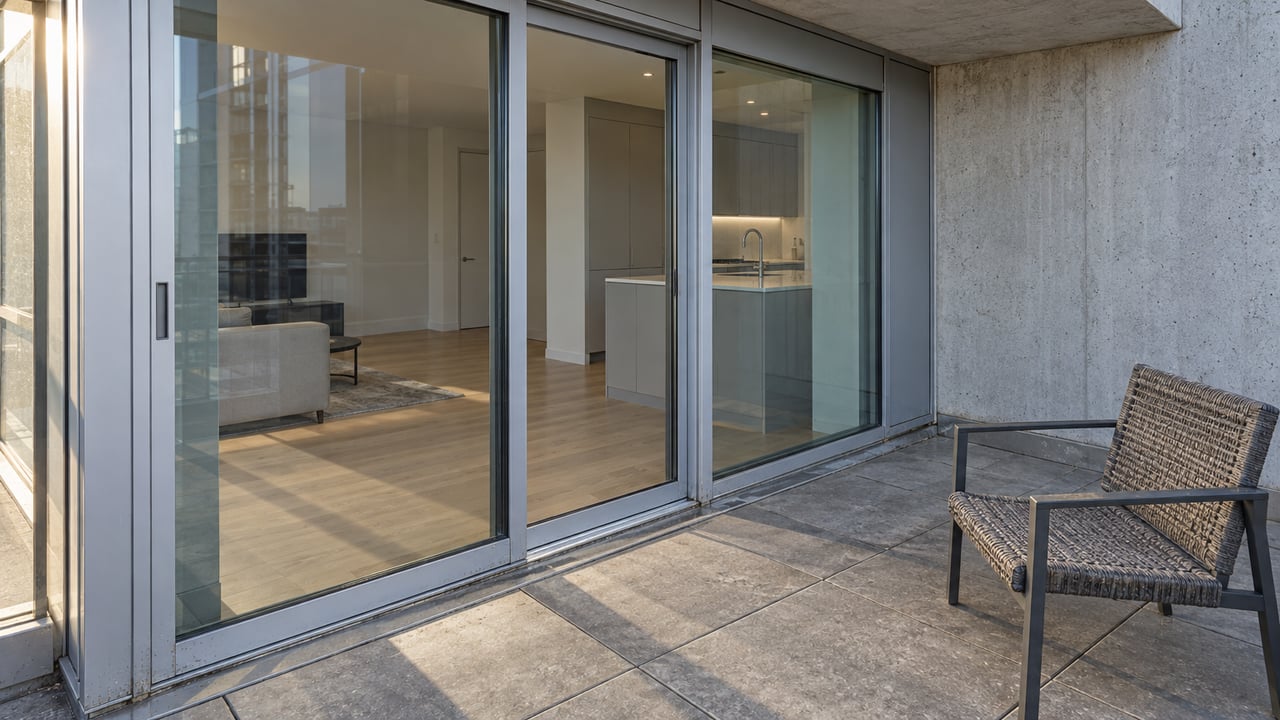
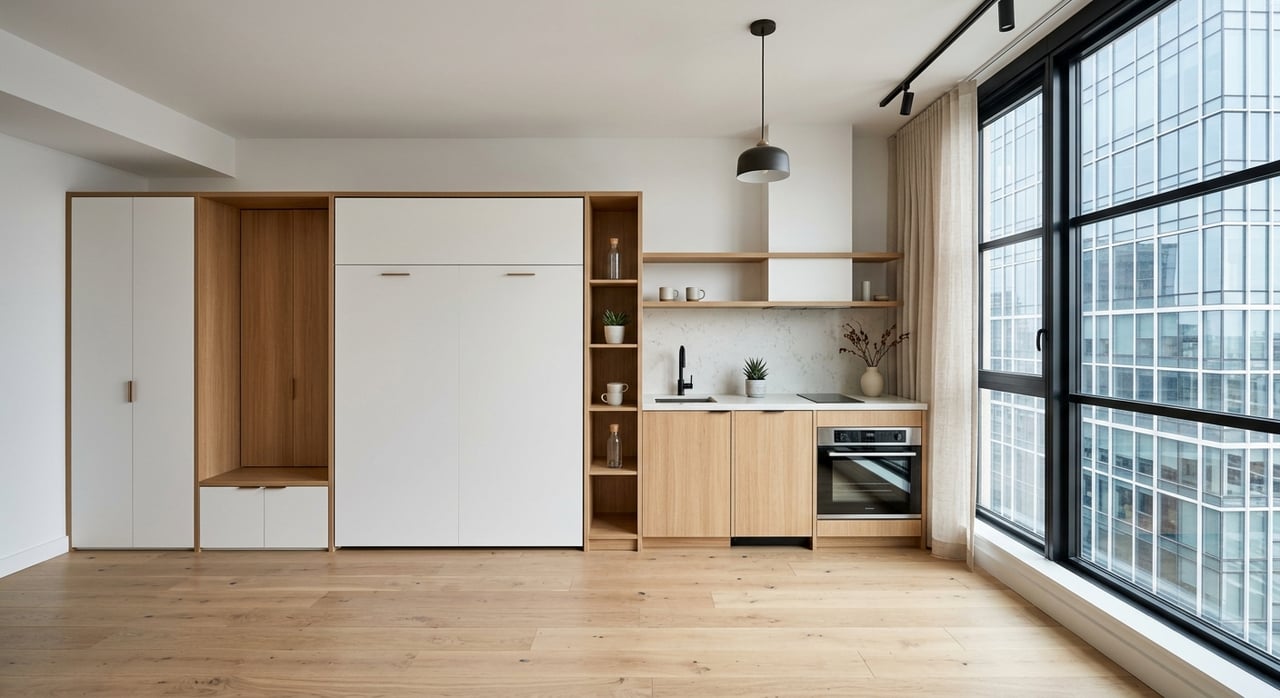
Floor-to-ceiling windows and strong natural light can make a compact apartment feel more open. Many Loop buildings lean into this with high-rise designs that emphasize window walls and skyline views.
A brighter apartment often feels larger and easier to style. It can also reduce the boxed-in feeling that sometimes comes with smaller floor plans.
Storage is a major quality-of-life feature in a small home. Generous closets, under-bed space, built-ins, and furniture with hidden compartments can all help a studio or convertible function better.
In a neighborhood where many apartments sit in the 500 to 600 square foot range, storage is not just nice to have. It is part of the layout strategy.
Some Loop buildings include in-unit laundry, and that can make a big difference in a compact apartment. It saves time, reduces clutter from laundry baskets, and keeps another chore from taking over your weekly routine.
In smaller homes, convenience features matter more because there is less room for friction. A few practical upgrades can make the apartment feel far more livable.
One of the smartest ways to think about micro-living in the Loop is this: you are not just renting the apartment. You are renting the full building ecosystem.
That is especially relevant in amenity-rich properties. Buildings such as 215 West, LINEA, and Randolph Tower City Apartments advertise features like fitness centers, pools, business centers, lounges, dog amenities, concierge services, and outdoor spaces.
If your building gives you places to work, exercise, relax, or host friends, you may not need all of that square footage inside your unit. In the Loop, amenities can take pressure off the apartment itself.
This is one reason small-space living often feels more manageable downtown than people expect. The value is not only in your floor plan. It is also in what the building and neighborhood add around it.
For many Loop renters, transit is the feature that makes micro-living work. CTA says the L serves more than 140 stations citywide, and its downtown guide shows the Brown, Green, Orange, Pink, Purple, and Red lines feeding the Loop area. Trains generally run every 7 to 10 minutes during the day and early evening, and every 10 to 15 minutes later in the evening.
If you can get where you need to go quickly, you may not need a car or the extra storage and parking considerations that come with one. That can make a smaller apartment feel like a more efficient trade.
There is one current detail to keep in mind. CTA says the State/Lake station closed on January 5, 2026 for reconstruction and is scheduled to reopen in 2029, with Clark/Lake and Washington/Wabash as nearby alternatives while the Lake Red Line station remains open.
If you are comparing Loop buildings, station access should be part of your search. Sometimes the better apartment is not the largest one. It is the one that keeps your daily routine easiest.
Micro-living works best when you edit your space on purpose. In the Loop, where many studios and compact layouts are already designed efficiently, small changes can go a long way.
Here are a few practical ways to make your apartment feel bigger:
The goal is not to fit a suburban amount of stuff into a downtown apartment. The goal is to support your real routine without wasting space.
The Loop’s housing story is still evolving. Chicago Loop Alliance reports ongoing office-to-residential projects, and WBEZ has reported at least 11 planned conversions with roughly 3,600 new apartments in the pipeline.
That suggests compact downtown living will remain an important part of the market. As more units come online, renters may see more options in studios, convertibles, and one-bedroom-plus-den layouts, especially in buildings designed around convenience and shared amenities.
For you, that means the search may become less about whether micro-living exists in the Loop and more about finding the right version of it. The best fit depends on your commute, your work style, your storage needs, and how much you want the neighborhood itself to function as an extension of home.
If you are thinking about a move to the Loop, the smartest next step is to compare layouts, amenity packages, and transit access side by side. That is where a compact apartment starts to make a lot more sense.
If you want help narrowing down Loop studios, convertibles, or one-bedrooms that match your routine, The Michael Scavo Group can help you move faster with a transparent, concierge-style apartment search.
Stay up to date on the latest real estate trends.